Updated September 8, 2026
Texas swing voters are not hiding in a single purple county. Crucial voters are suburban moms in Collin, Fort Bend, and Williamson. Likely voters are Hispanic evangelicals in the Rio Grande Valley, San Antonio’s north side, and Houston’s second-ring churches. They are energy workers in Midland, Odessa, and the Eagle Ford. If you want to know why the Senate race is a tossup and the governor’s race is tight, stop staring at downtown Austin and start driving those three maps.
This week’s public-poll picture is blunt. There is no brand-new statewide survey dated September 8. The live read is the late-August cluster plus early-September averages. The Senate contest between Republican Ken Paxton and Democrat James Talarico is inside the margin in most surveys. Governor Greg Abbott still leads Democrat Gina Hinojosa, but the cushion is single digits. The people moving those numbers are Texas swing voters — and they do not live in the same Texas.
The three tribes of Texas swing voters
Consultants talk about Texas as if it were one electorate. It is three overlapping labor markets.
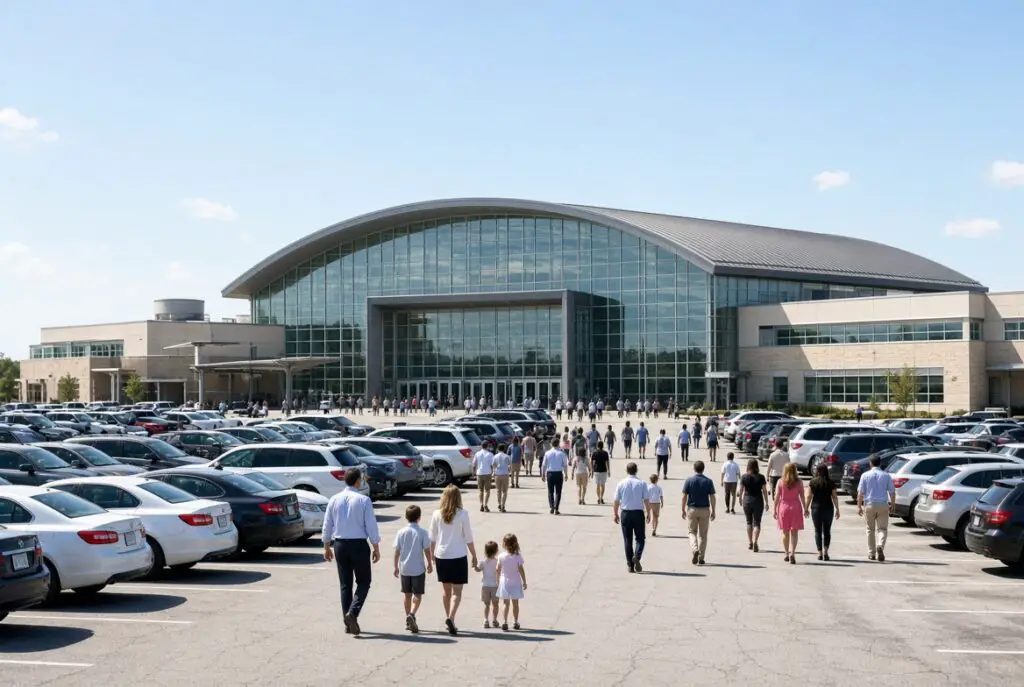
- Suburban moms live where the schools, property-tax bills, and pickup lines are. They are dense in Collin, Denton, Williamson, Hays, Fort Bend, and the master-planned edges of Harris and Tarrant.
- Hispanic evangelicals are not the same as Hispanic Catholics. Protestants are a minority of Latino Texas, but they punch above their weight in GOP identification and in 2024 Trump support. Look to Hidalgo, Cameron, Webb, Bexar, Harris, and Dallas County storefront churches.
- Energy workers live where the permits are. Midland, Martin, Upton, Howard, Ector, Reeves, and Loving still set the Permian clock. South Texas oil-and-gas counties in the Eagle Ford add another belt.
Win two of the three groups of Texas swing voters, and you can still lose statewide. Lose all three on turnout, and the math breaks.
How Texas swing voters are polling this week
Statewide polls do not isolate “suburban moms,” “Hispanic evangelicals,” or “rig hands” as labeled boxes. They do isolate women, suburbs, Hispanics, and rural West Texas. Stack those crosstabs and the map comes into focus.
| Race | Latest public read | What it means for Texas swing voters |
|---|---|---|
| U.S. Senate | UT/Texas Politics Project (Aug. 5–13): Talarico 42%, Paxton 39%. Emerson (Aug. 9–10): Paxton 47%, Talarico 46%. Fox (late July): Talarico 51%, Paxton 48%. | Dead heat. Women, Hispanics, and independents are the swing, not rural East Texas. |
| Governor | Early-September averages put Abbott ahead by about 3 to 4 points. UT August: Abbott 45%, Hinojosa 40%. | Incumbent still favored. Suburb and Latino movement is what keeps it from being a blowout. |
| Hispanic Senate preference | Times/Siena June: Talarico 61–29. Fox July oversample: 59–41. Emerson August favorability: Talarico 50.5%, Paxton 33.9%. | A swing back from the near-tie in 2024 Hispanic presidential estimates — with a wide poll-to-poll range. |
The University of Texas / Texas Politics Project August poll also found suburban Texans joining rural Texans against local data-center siting: 60% opposed. That is a suburban-mom issue even when no one uses the phrase. Prices remain the loudest kitchen-table item in the same survey.
For the longer arc, the New York Times/Siena June analysis is still the cleanest explanation of the map: Republican strength among Hispanic voters had been covering GOP weakness in the fast-growing suburbs. When that Hispanic margin snapped back toward Democrats in 2026 polling, Texas swing voters turned the state into a tossup.
Suburban moms: Collin, Fort Bend, Williamson, and the school-calendar vote
If you want Texas swing voters in a carpool line, start here.
Collin County — Plano, Frisco, McKinney, Allen — is the classic North Texas suburb that used to be a Republican machine and is now a split ticket. College-educated women, Asian American precincts, and new housing all pull the same direction: less automatic R than a decade ago.
Fort Bend County — Sugar Land, Missouri City, Rosenberg — is Houston’s swing suburb. It is one of the most diverse large counties in America. Moms here vote schools, flood insurance, commute time, and health care. They do not vote “the culture war” as a single bloc.
Williamson and Hays — Round Rock, Georgetown, Leander, Kyle, Buda — sit on Austin’s growth edge. These are the counties where a statewide Democrat can get close without winning rural Texas.
Statewide crosstabs keep showing the same gender split. In UT polling, women are closer to a tossup than men. Fox’s July poll listed women among Talarico’s best groups. That is the suburban-mom signal, even when pollsters do not isolate “moms.”
Watch property-tax talk, electric bills, data-center fights, and school-board residue. Those are the items that move Texas swing voters who already have a house and a 5:15 p.m. pickup.
Hispanic evangelicals: not the Valley caricature, and not the cathedral either
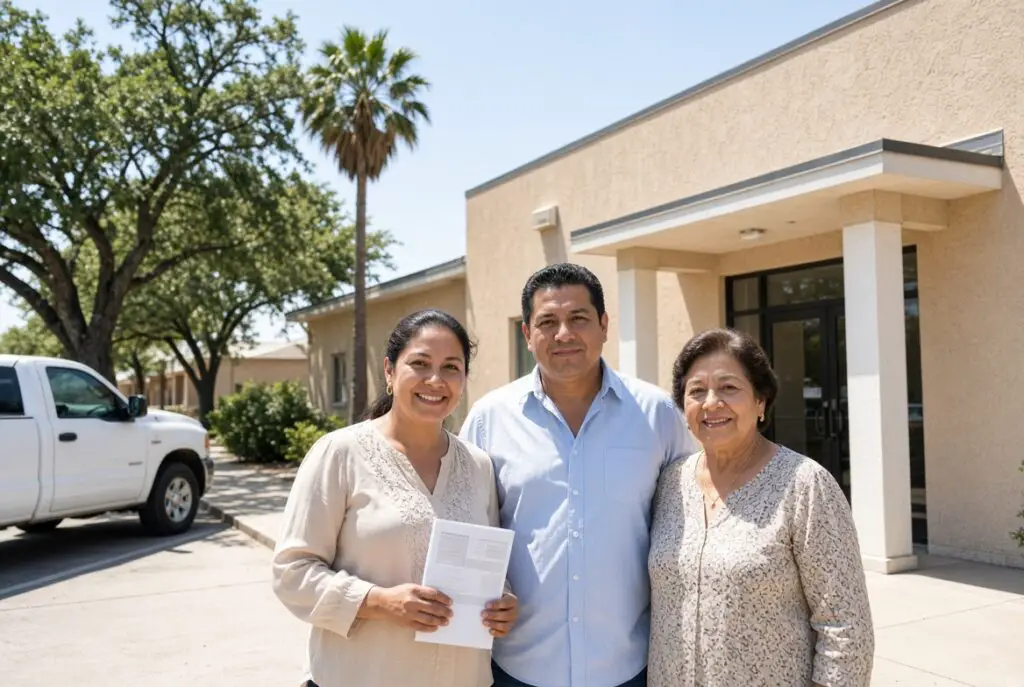
Most Latino Texans are still Catholic. That is the base fact. The swing inside the swing is Hispanic Protestants — many of them evangelical or Pentecostal.
PRRI’s religion census work puts Hispanic Protestants at about 11% of all Texans and Hispanic Catholics at about 18%. Nationally, Hispanic Protestant Republican identification has doubled over a decade, to 34%. In 2024, PRRI found Trump ran far stronger among Hispanic Protestants (64%) than among Hispanic Catholics (43%). By mid-2026, Trump favorability among those same Protestant Hispanics had fallen to 37%.
Geography for this slice of Texas swing voters:
- Rio Grande Valley and Laredo — Hidalgo, Cameron, Starr, Webb. Trump made some of his largest 2016-to-2024 gains in these majority-Hispanic counties. Equis found Talarico dominating majority-Latino precincts in the Democratic primary here. That is not the same as a general-election lock.
- San Antonio / South Texas — Bexar plus the Eagle Ford counties. Storefront churches and bilingual services sit next to older Catholic parishes.
- Houston and Dallas storefront churches — Harris and Dallas have more Hispanic evangelicals in raw numbers than many Valley counties, even if the share of the county is smaller.
Do not flatten this group. A Spanish-language Pentecostal church in Pharr and an English-dominant Baptist church in northwest San Antonio do not get the same mailer. Immigration enforcement, groceries, and character questions about Paxton are all live. Fox found Hispanic voters more worried that Paxton lacks the character to serve than that Talarico is too extreme.
Energy workers: the Permian still votes like the Permian
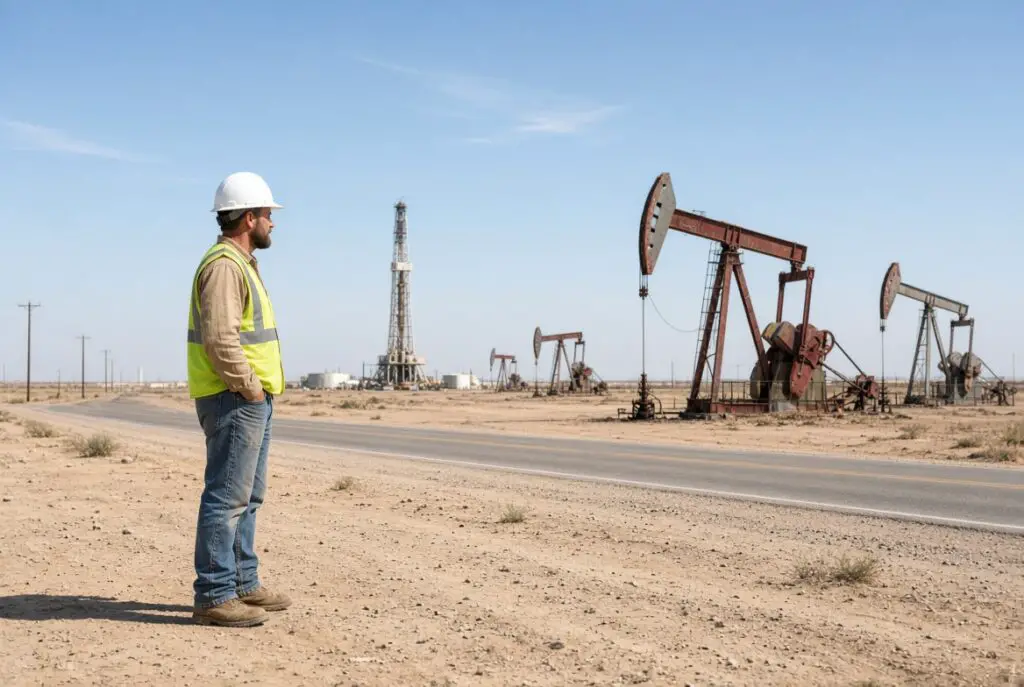
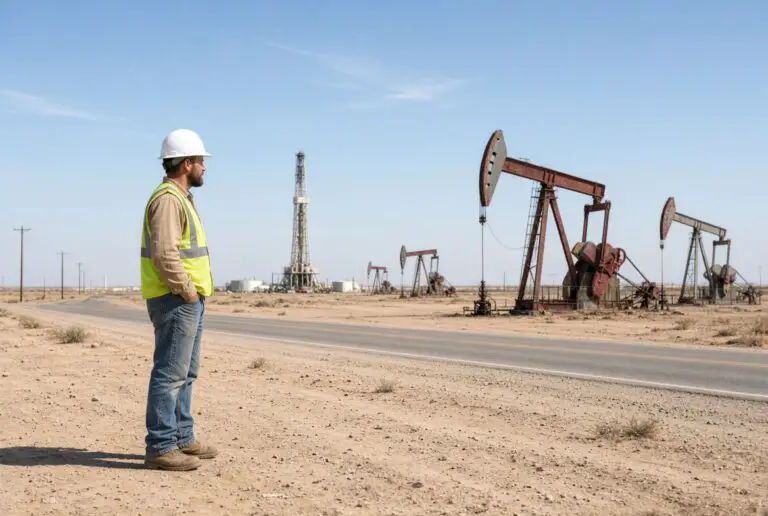
Texas swing voters in oil country are less “swing” than the other two groups — until power bills, transmission lines, and layoffs show up.
As of this week’s production tables, the Permian core still leads the state: Martin, Midland, Upton, Loving, Reagan, Reeves, Howard. Midland County remains among the hottest permit counties in Texas. These households vote work, royalties, and whether Austin is coming for the patch.
That does not make them deaf. West Texas producers are pushing electricity demand so high that transmission fights now run through the Legislature and the PUC. Rural and suburban opposition to data centers is already in the UT poll. An energy worker can want more oilfield power and still hate a high-voltage line across the ranch. Those are not opposite positions in Midland. They are the same afternoon.
Eagle Ford counties — Karnes, DeWitt, La Salle, Dimmit, Webb — overlap Hispanic and energy maps. That is why a statewide campaign cannot run one South Texas script.
One week, three ZIP codes
If you only knock doors in Travis County, you will misread Texas swing voters every time.
- Monday in Frisco: a college-educated mom comparing school ratings, grocery prices, and whether Paxton feels like a risk.
- Wednesday in Pharr: a Hispanic evangelical household that backed Trump in 2024, is colder on him now, and is still not sold on Austin Democrats.
- Friday in Odessa: a completions crew that wants the Permian electrified and does not want a lecture about it.
Those three conversations decide whether November is close or over early. Pair this map with our Texas Senate explainer and the current Texas Senate roster. The statewide race is not a vibe. It is three labor markets arguing in public.
What to watch between now and November 3
- The next UT or Emerson drop. If suburban women and Hispanics move together, the Senate race is not a polling error.
- Valley and Fort Bend early-vote share. Turnout, not message tests, will decide whether 2024’s Hispanic shift sticks.
- Permian power and data-center fights leaking into suburban mail. That is how energy-worker politics reaches Collin County.
FAQ: Texas swing voters
Who are Texas swing voters in 2026?
The usable definition is suburban moms in the Texas Triangle, Hispanic evangelicals across South Texas and the big metros, and energy workers in the Permian and Eagle Ford. Together they explain why statewide races tightened after 2024.
Are Hispanic evangelicals the same as Hispanic voters?
No. Most Latino Texans are Catholic. Hispanic Protestants are smaller, more Republican-leaning over the last decade, and more volatile in 2026 polling after a drop in Trump favorability.
Which counties matter most?
Collin, Denton, Fort Bend, Williamson, Hays, Hidalgo, Cameron, Bexar, Harris, Midland, and Ector. Miss two of those and a statewide campaign is flying blind.
Is Texas really a tossup?
The Senate race is. The governor’s race is closer than the last decade of Texas politics trained people to expect, but averages still show Abbott ahead. Polls are not votes.
Polling cited here is public as of September 8, 2026. Subgroup samples in any one survey are noisy. Read the cluster, not the one shocking crosstab.